Espresso Machine Warranty Guide: What Actually Matters
By Aisha Khan • 1st Dec
When shopping for a home espresso machine, understanding the espresso machine warranty guide is as crucial as checking pressure ratings or temperature stability. In my years stress-testing machines during chaotic family mornings, I've learned that warranty coverage explained clearly, not just the length of coverage, is what truly separates a reliable daily driver from a source of frustration. Your morning ritual shouldn't include worrying about repair costs or voided warranties. Instead, your machine should disappear into your routine, reducing morning friction while delivering consistent results. One winter morning, I witnessed how a well-structured warranty on a quieter model with thoughtful workflow design saved a family 90 seconds of stress before school and work (less fiddling, more sipping).
Understanding Standard Warranty Terms
Before adding any machine to your cart, decode these fundamental warranty components using this time-stamped checklist: For a data-backed look at long-term value beyond the warranty period, see our longevity and cost-per-year analysis.
Within 5 Minutes: Identify the basic coverage period
- Standard espresso machine warranty terms typically range from 90 days to 3 years, depending on brand and model
- Most residential machines: 1-2 years parts and labor
- Entry-level machines (sub-$500): Often 90 days to 1 year
- Premium models ($1,000+): Frequently 2 years
Within 10 Minutes: Check component-specific coverage
Not all parts are covered equally. A Jura household machine, for instance, typically offers 2 years or 6,000 brews (whichever comes first), while La Marzocco's Linea Mini provides 24 months of parts and labor coverage. Breville's popular Barista Express comes with a 1-year limited warranty that covers defects in materials or workmanship. Look specifically for:
- Heating elements and boilers (often covered longer than exterior components)
- Pumps and electrical systems
- Portafilters and steam wands
- Grinder mechanisms (if included)
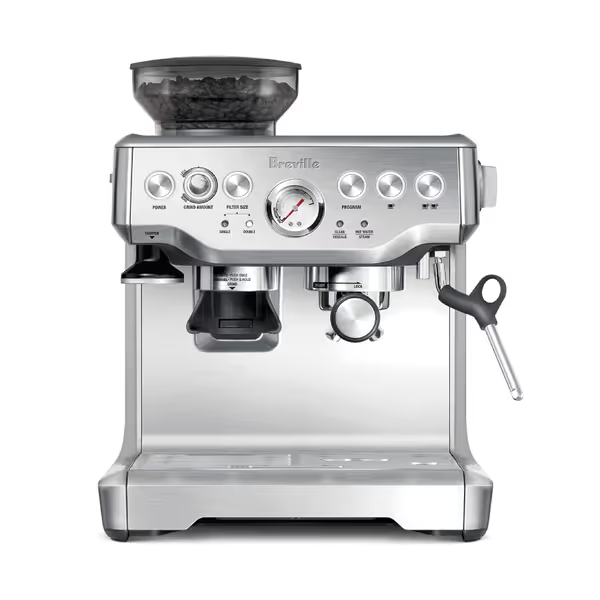
Breville Barista Express Espresso Machine
Café-quality espresso at home with integrated grinder and PID temperature control.
$599.95
Integrated GrinderGo from beans to espresso in under one minute.
Integrated GrinderGo from beans to espresso in under one minute.
Pros
Integrated grinder for fresh espresso in under 1 minute.
PID temperature control ensures consistent, optimal extraction.
Powerful steam wand for microfoam milk and latte art.
Cons
Some users report machine stopping issues over time.
Can be noisy during operation.
Customers find this espresso machine to be a high-quality, easy-to-use device that makes great shots of espresso and delicious-tasting coffee. The machine is worth its price, and customers appreciate that it comes with cleaning tablets.
Customers find this espresso machine to be a high-quality, easy-to-use device that makes great shots of espresso and delicious-tasting coffee. The machine is worth its price, and customers appreciate that it comes with cleaning tablets.
What Voids Your Warranty (Before You Hit 'Purchase')
Many warranty claims get denied not because of machine failure, but because owners unknowingly violate terms. Use this if-then guidance to protect your investment: Not sure what "regular maintenance" should include for your specific machine? Check our machine-type maintenance routines to stay compliant.
If you skip regular maintenance, then your warranty becomes void. This simple truth applies to nearly all manufacturers.
Top 3 Warranty-Voiding Scenarios:
- Improper cleaning/descaling (using non-approved chemicals or skipping maintenance schedules)
- Family-friendly fix: Set phone reminders for maintenance with clear noise and mess metrics ("Spend 3 minutes every 2 weeks, not 20 minutes every 6 months")
- Commercial use of home machines (making 20+ drinks daily in equipment designed for residential use)
- Reality check: Most "home" warranties explicitly void coverage if used commercially
- Unauthorized repairs or modifications (even replacing a gasket with non-OEM parts can invalidate coverage)
- Pro tip: Keep all maintenance receipts (even basic descaling) to prove compliance
Many manufacturers, like Capresso, explicitly state their warranty doesn't cover "routine maintenance, cleaning and servicing," yet requires proof of such maintenance to honor claims. To prevent scale-related damage that often voids coverage, follow our espresso water guide. This paradox is why understanding your specific espresso machine service coverage details matters more than the headline warranty period.
Extended Warranty Options: Worth the Investment?
For home baristas seeking peace of mind, extended warranty options often seem appealing, but they're not equally valuable across all machine types. Consider these factors before adding that "protection plan" at checkout:
When Extended Coverage Makes Sense:
- Machines costing $800+ (where repair costs approach replacement value)
- Models with known complex electronics that fail after standard warranty period
- Machines where repair networks are limited in your region
When to Skip Extended Coverage:
- Entry-level machines (repair costs often exceed value)
- Simple, mechanical machines with easily replaceable parts
- Brands with robust DIY repair communities
A key insight from analyzing noise and mess metrics during machine failures: most issues requiring warranty service occur within the first 90 days. If you hit problems in those first weeks, start with our espresso troubleshooting guide before filing a claim. This aligns with forum discussions where experienced users note that "that's when most manufacturing defects appear." If you're considering extended coverage, verify:
- Does it include shipping costs? (Heavy espresso machines mean expensive returns)
- Is labor covered, or just parts?
- Are wear items like gaskets and group head seals included?
Your Warranty Action Plan
Here's a practical, step-by-step approach to warranty protection that aligns with your morning routine goals:
Step 1: Pre-Purchase Verification (5 minutes)
- Search "[brand] + [model] + warranty PDF" before buying
- Confirm coverage duration for your specific model (not just the brand's general policy)
- Note required maintenance intervals that affect coverage
Step 2: Day One Documentation (2 minutes)
- Take a photo of the receipt with a visible purchase date
- Note the serial number in your phone notes
- Locate the nearest authorized service center
Step 3: Maintenance Tracking (Ongoing)
- Create a simple spreadsheet tracking: dates, what you cleaned, products used
- Use manufacturer-approved cleaning solutions only
- Keep emptied cleaning solution containers as proof
Step 4: Problem Documentation (If Needed)
- Record a video of the issue as it occurs (many manufacturers require this)
- Note the exact time since last maintenance
- Document water quality/treatment used
This systematic approach transforms warranty anxiety into confidence. Live in a hard-water area? Machines with built-in filtration can further protect components and your warranty. I've seen families who implement this simple framework feel noticeably more at ease with their equipment, knowing exactly what's covered and what steps to take if issues arise.
Final Sip: Aligning Warranty with Your Real-Life Workflow
Your ideal espresso machine shouldn't just make great coffee, it should integrate seamlessly into your morning rhythm without becoming a source of stress. When evaluating warranty coverage explained clearly, prioritize brands that understand home environments. Look for companies that honor claims quickly without excessive paperwork, offer loaner machines during repairs, and provide clear guidance for owner-maintained components.
The best warranty isn't necessarily the longest one, it's the one that aligns with how you actually use your machine in your specific kitchen context. A machine that sips quietly into your morning routine while delivering reliable performance is worth more than raw power with complicated service requirements.
Remember: Less fiddling, more sipping, your morning deserves frictionless espresso. Your warranty should support that goal, not undermine it.
Further Exploration: Check manufacturer websites for specific warranty PDFs, and join community forums where users share real-world warranty claim experiences with different brands. Look for patterns in how companies handle claims, not just what their paperwork promises.
Related Articles