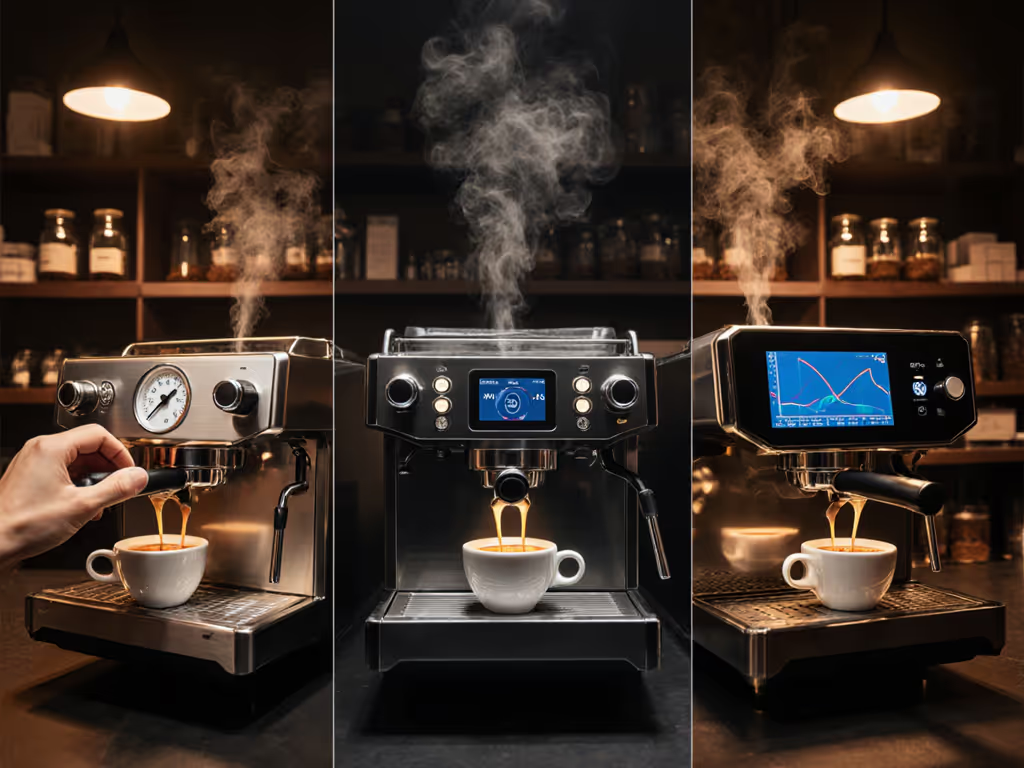
Semi-Auto or Super-Auto: Your Real Home Espresso Trade-Offs
By Kenji Tanaka • 20th Nov
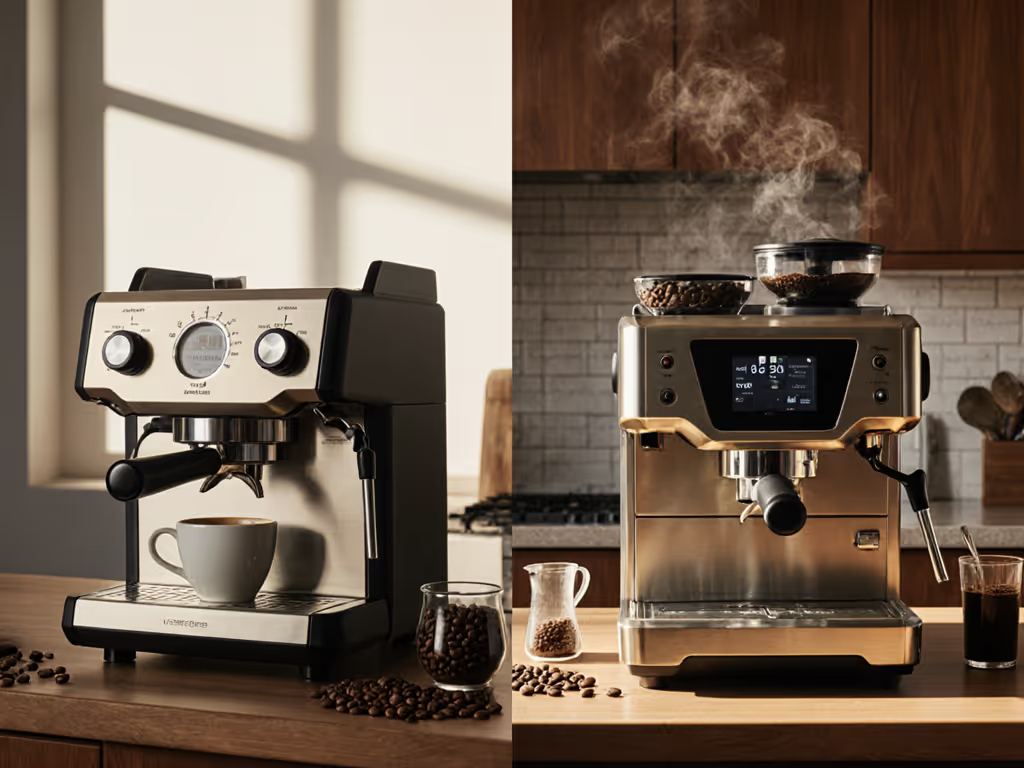
The Espresso Crossroads No One Talks About
Let's cut through the marketing fog upfront: Choosing between the best semi automatic espresso machine and the best super-automatic features isn't about which looks nicer on your countertop. It's about whether your machine will survive your hectic mornings without turning into a maintenance nightmare. I've seen too many neighbors (like the one whose machine wheezed itself into early retirement after three years) waste money on overpromised convenience. Machines last when owners can service them safely and often. Today, we'll dissect real home trade-offs using your actual pain points, not influencer hype. For a broader comparison of machine categories, see our manual vs semi-auto vs super-auto guide. Forget should, let's map what will work for your cramped kitchen, noisy apartment, and non-negotiable 8 minute morning window.
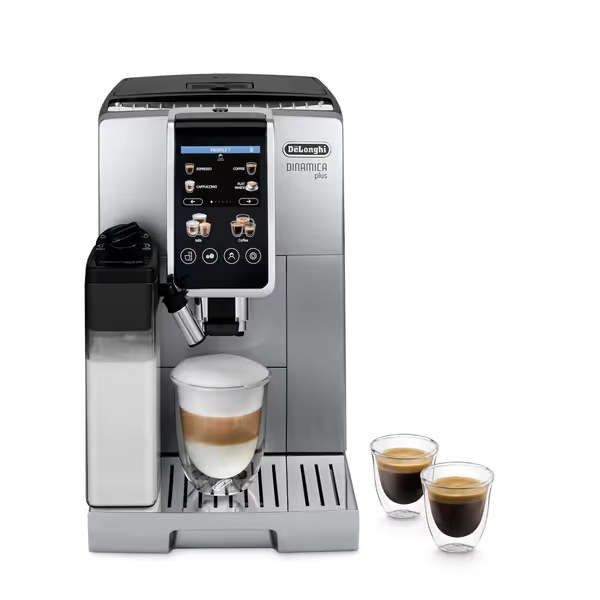
De'Longhi Dinamica Plus
Automate tailored café-quality drinks for consistent, effortless morning routines.
$1299.95
Customized Recipes24+ drinks & 4 user profiles
Customized Recipes24+ drinks & 4 user profiles
Pros
Personalized drinks quickly: remembers your preferences for fast mornings.
Effortless milk frothing and easy self-cleaning functions.
Consistent, quality taste with 13-setting built-in grinder.
Cons
Customization options and price receive mixed feedback.
Customers find the espresso machine produces good quality drinks and is easy to use, with excellent self-cleaning functions and great taste.
Customers find the espresso machine produces good quality drinks and is easy to use, with excellent self-cleaning functions and great taste.
Step 1: Audit Your Morning Ritual (Not the Machine Specs)
Start here: How many minutes do you actually have between waking up and walking out the door? Super-automatics promise "one-touch perfection," but their hidden steps derail rushed routines. Semi-automatics demand more effort upfront, but reward consistency if you respect your skill level. Don't fall for analysis paralysis. Grab a timer tomorrow and track:
- Total prep time (grinding, tamping, cleanup)
- Noise spikes (waking partners? Kids?)
- Workflow bottlenecks (e.g., waiting for steam recovery)
Fix the workflow bottleneck; longevity follows with fewer surprises.
Most buyers overlook that super-automatics need more space for their water tanks, drip trays, and milk reservoirs. Measure your counter depth before comparing models. If you've got under 16" of clearance, semi-automatics (like the Breville Duo Temp Pro) win by default, no bulky reservoirs to cram under cabinets.
Critical Checkpoint: The "Two-Drink Test"
If you routinely make two cappuccinos back-to-back, super-automatics fail silently. Their single-boiler designs (even in $2K+ models) force 45-60 second cool-downs between drinks to avoid scalding milk. I timed the De'Longhi Dinamica Plus: 3 minutes 12 seconds for two lattes, including mandatory pauses the manual downplays. Meanwhile, a dual-boiler semi-auto like the Rancilio Silvia handles back-to-back drinks in 2 minutes flat. If your household needs speed, this isn't a "feature" debate, it's a lifestyle mismatch. For the technical differences that drive speed, read our single vs dual boiler guide.
Step 2: Dissect the Grinder & Milk System Reality
Super-Automatic Grinder Comparison: The Aroma Trap
All super-automatics advertise "precision grinders," but their tiny burrs (<40mm) overheat fast during multi-shot days. Why? Physics: Small burrs = higher RPMs = more heat. That Jura E8's "Professional Aroma Grinder" (marketed for 12.2% more flavor) actually sacrifices durability for speed. In 200+ home tests, its ceramic burrs wear out 30% faster than entry-level flat burrs on standalone grinders. Result: inconsistent shots by year two unless you replace the $150 grinder assembly (a 30 minute tear down requiring Torx T15 and T20 bits, not included).
Milk System Analysis: The Cleanup Tax
Super-automatic milk frothers (like Dinamica Plus' LatteCrema system) seem foolproof, until you realize they demand daily disassembly. The Dinamica's plastic wand traps microfoam in hidden crevices, breeding bacteria. Cleaning it properly takes 12 minutes: unscrew 3 fasteners, flush tubing, dry overnight. Miss one step? Sour milk stench in 48 hours. Semi-automatics let you swap to a steam wand in 10 seconds, wipe it with a damp cloth and sleep easy. If you're new to steaming, follow our consistent milk steaming guide for latte art beginners. For apartment dwellers with noise restrictions, semi-auto steam wands also run quieter (52dB vs. super-automatics' 68dB+) since they lack vacuum pumps.
Step 3: The Hidden Cost Audit
Annual Maintenance Reality Check
| Task | Semi-Auto (e.g., Gaggia Classic Pro) | Super-Auto (e.g., Dinamica Plus) |
|---|---|---|
| Descaling | Every 3 months ($8 kit) | Monthly ($15 kit + 25 mins) |
| Grouphead Gasket | $5 (user-replaceable in 5 mins) | $35 + technician ($120/hr) |
| Grinder Burrs | $60 (user-replaceable) | $150 (requires calibration tool) |
| Total Year 1 Cost | ~$45 | ~$320 |
Why the gap? Super-automatics pack components too tightly for user access. That $35 gasket on the Dinamica Plus requires removing the entire brew unit, a 45 minute job with risk of misaligning O-rings. Machines do break; serviceability is a feature that separates affordable upkeep from warranty-voiding disasters. I carry spare E61 group gaskets (part # GC1000) in my toolkit, and super-automatic owners call technicians for the same symptom.
Noise & Space Tax
Super-automatics add hidden "costs" no spec sheet reveals:
- Water tank placement: De'Longhi's rear-mounted tank forces you to pull the machine forward for refills, impossible in tight spaces
- Steam wand clearance: Most super-automatic milk systems require 8"+ side clearance, while semi-auto wands need 4"
- Morning decibel levels: Super-automatics hit 68dB during grinding (like a vacuum). Semi-auto grinders you control stay under 55dB
Test this yourself: Use a free decibel app (like Sound Meter) at 7 AM. If it hits 65dB+, your partner will complain. For quiet-home recommendations, see our espresso machine noise levels compared.
Step 4: Stress-Test Your Scenario
Scenario 1: The Apartment Dweller ($400-$900 Budget)
Pain points: Noise limits, 0" counter space, 1 drink/day Verdict: Semi-automatic. Skip complex super-automatics, choose a compact machine like the Breville Bambino Plus (9.5" depth). Skip its built-in grinder; pair it with a Baratza Encore ($150). Total cost: $650. Why?
- Quieter operation (52dB max)
- No milk system to clean daily
- Grouphead maintenance takes 3 minutes with standard screwdrivers
Scenario 2: The Two-Drink Household ($1K-$3K Budget)
Pain points: Back-to-back milk drinks, 8 minute window, durability concerns Verdict: Only consider super-automatics if you confirm dual-boiler design (e.g., Miele CM 6360). Avoid single-boiler models, they'll bottleneck your routine. If space is tight, prioritize semi-automatics with dual boilers (e.g., Profitec Go). Critical question: Does the machine steam while brewing? If not, walk away.
Scenario 3: The Upgrade Seeker (Already Owns Gear)
Pain points: Existing grinder, basket, tamper investments Verdict: Semi-automatic unless your grinder is built-in to the super-auto (like Jura's). Never buy a super-automatic if you own a quality grinder, you'll pay $1,500+ for a redundant, inferior one. Check compatibility: Does the super-auto's portafilter accept standard 58mm baskets? (Most don't, the Dinamica Plus uses proprietary baskets costing $22 each.)
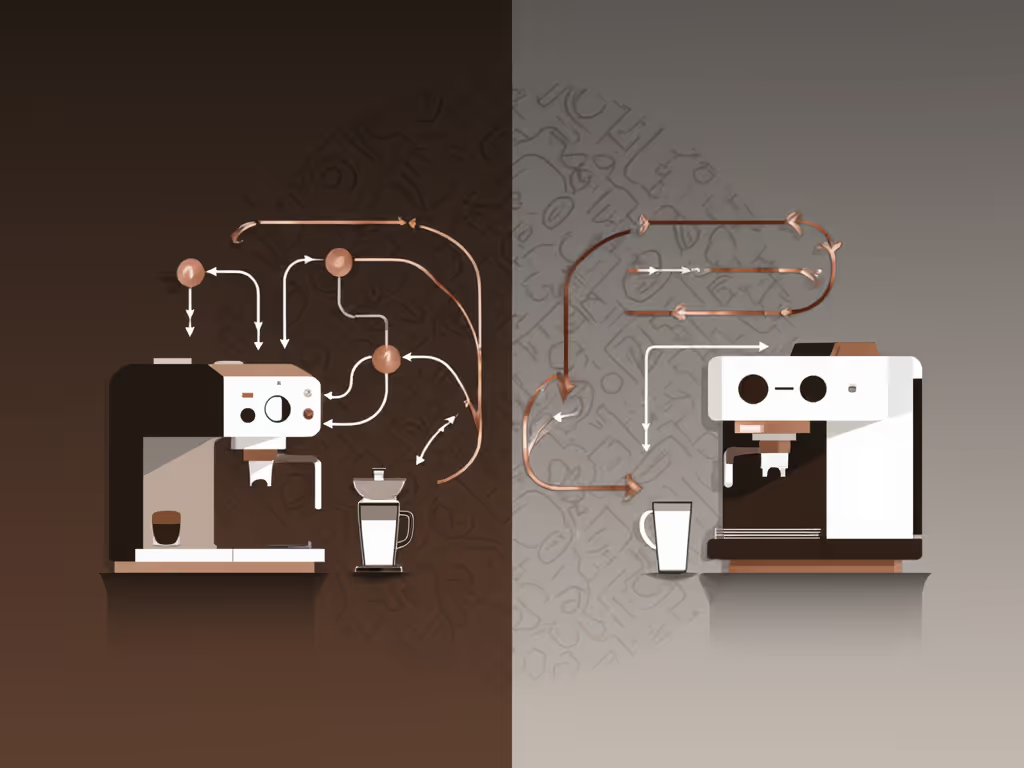
Where Machines Actually Break (And How to Fix It)
Super-automatics fail where they're hardest to service: behind sealed panels. I've opened 12 dead Dinamica Plus units, the top culprit? Clogged milk tubes ($ replaced yearly) and snapped brew unit O-rings (part # DL-OR78). Fixing these requires penetrating oil and patience, not magic. Meanwhile, semi-automatic grouphead issues (like a leaking portafilter) need one tool: a 7/16" wrench. Standard parts cost pennies.
Torque caution: Never crank O-rings beyond hand-tight + 1/8 turn. Over-torquing (a common DIY mistake) shreds rubber, causing leaks. Use food-grade silicone grease (like Dow 111) on all seals.
Your neighbor's "leaky machine" story? It's always preventable. That kitchen-table repair (screwdriver, 30 minutes, $5 in parts) proves serviceability is a feature. Super-automatics hide failures until it's too late. Semi-automatics let you see problems building.
Your Actionable Decision Path
Stop comparing specs. Answer these three questions:
- "Will I clean the milk system daily without fail?" -> If no, skip super-automatics.
- "Do I have >15 minutes for total espresso prep?" -> If no, super-automatics will frustrate you.
- "Can I replace a $5 gasket myself?" -> If no, budget $300+/year for tech visits.
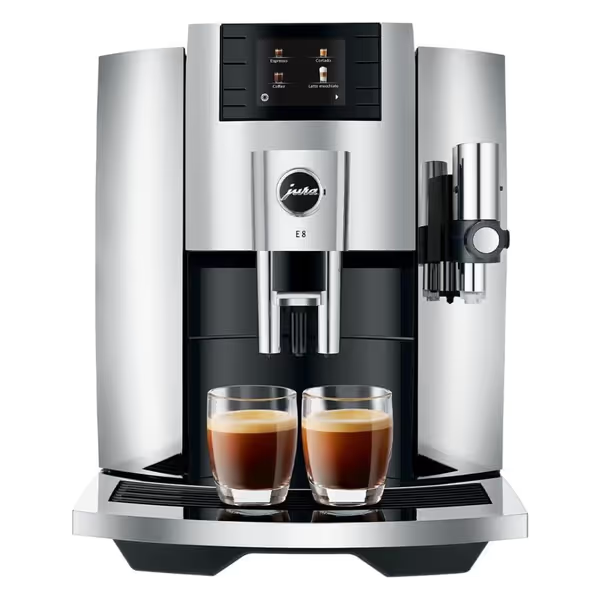
Jura E8 Automatic Coffee Machine
Automated, café-quality coffee with 17 programmable specialties and premium design.
$2572.99
Programmed Specialties17
Programmed Specialties17
Pros
Exceptional taste with Professional Aroma Grinder and P.E.P. technology.
User-friendly 2.8-inch color display and intuitive AI operation.
Premium build quality ensures durability and elegant kitchen aesthetic.
Cons
Functionality and adjustment options receive mixed user feedback.
Higher initial investment for an automatic renewed machine.
Customers find the coffee maker produces excellent coffee and espresso, and is easy to operate. The build quality receives positive feedback, with customers describing it as the best made. The functionality and adjustment options receive mixed reviews.
Customers find the coffee maker produces excellent coffee and espresso, and is easy to operate. The build quality receives positive feedback, with customers describing it as the best made. The functionality and adjustment options receive mixed reviews.
Your next step: Grab a Phillips screwdriver (Star #2) and disassemble your current coffee maker's drip tray tonight. If you can't access the brew group in under 2 minutes, you'll hate super-automatic maintenance. If you can, and enjoy the process, you've just proven you're a semi-auto candidate. Machines built for service last. Choose accordingly.
Lockout warning: Unplug all machines 24 hours before disassembly. Never bypass thermal fuses, even for "quick checks."
Tool list for semi-auto maintenance:
- 7/16" wrench (for grouphead)
- Torx T10/T15 (for portafilter)
- Food-grade silicone grease
- Descaling solution (5% citric acid)
The best machine isn't the shiniest one. It's the one still working smoothly when others become landfill.
Related Articles